Low AMH: Can You Still Get Pregnant?
Priyanka Radhakrishna
June 8, 2026
No comments
Understanding Low AMH and Fertility
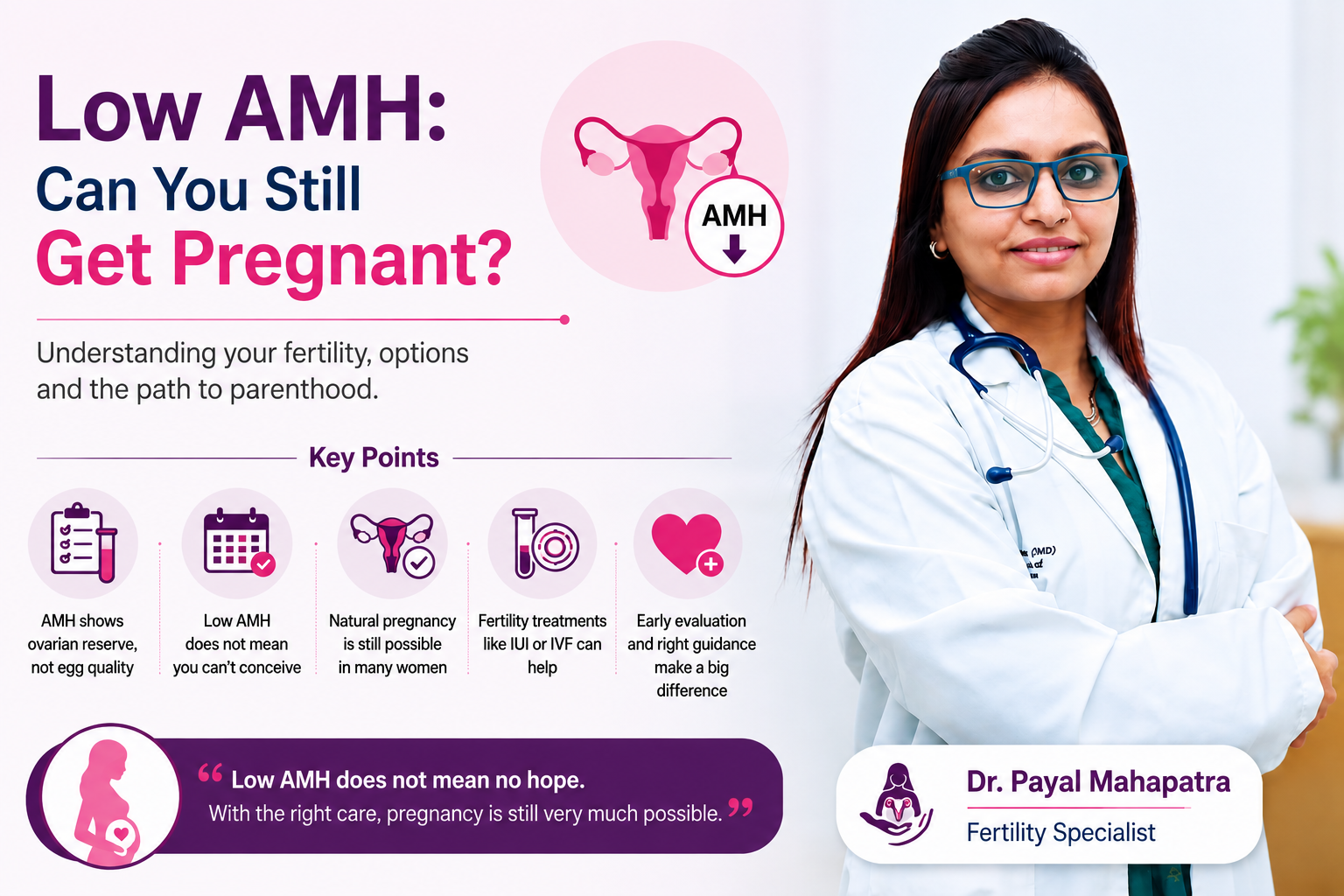
One of the most common concerns women face when trying to conceive is hearing that they have a low AMH level. For many, this diagnosis can be overwhelming and may lead to questions such as, "Can I still get pregnant?" or "Does low AMH mean infertility?"
The reassuring answer is that low AMH does not mean you cannot get pregnant. While it may indicate a reduced ovarian reserve, many women with low AMH levels conceive naturally or with fertility treatment.
What is AMH?
AMH, or Anti-Müllerian Hormone, is a hormone produced by small follicles in the ovaries. It is commonly used as a marker of ovarian reserve, which refers to the number of eggs remaining in the ovaries.
AMH levels naturally decline with age. Generally, higher AMH levels indicate a larger ovarian reserve, while lower levels suggest a reduced reserve. However, AMH does not directly measure egg quality, nor can it accurately predict a woman's ability to become pregnant.
What Does Low AMH Mean?
A low AMH level suggests that the number of eggs remaining in the ovaries may be lower than expected for your age. However, fertility depends on several factors beyond ovarian reserve, including age, egg quality, ovulation, sperm health, and uterine health.
Many women with low AMH continue to ovulate regularly and achieve successful pregnancies, making AMH just one part of a comprehensive fertility assessment.
Can You Get Pregnant with Low AMH?
Yes. Pregnancy is still possible with low AMH. Some women conceive naturally, while others may benefit from fertility treatments such as ovulation induction, Intrauterine Insemination (IUI), or In Vitro Fertilization (IVF).
Early evaluation and timely treatment can significantly improve outcomes, particularly for women who are planning pregnancy in the near future.
Final Thoughts
A low AMH diagnosis can be concerning, but it should not be viewed as the end of your fertility journey. With proper evaluation, personalized treatment, and expert guidance, many women with low AMH go on to achieve successful pregnancies.
Remember, low AMH indicates a reduced ovarian reserve—not a reduced chance of hope. Pregnancy is still possible with the right care and support.
