PCOS Treatment: Medical Options, Lifestyle and Fertility
Polycystic ovary syndrome, or PCOS, is one of the most common hormonal conditions in women of reproductive age. It can affect periods, skin, hair, weight and fertility, and it looks different from one woman to the next. That is why PCOS treatment is planned around each woman's symptoms and goals, not a single formula.
This guide explains how PCOS is diagnosed, what treatment usually involves, how it is managed when you want to conceive and when to see a doctor.
What Is PCOS?
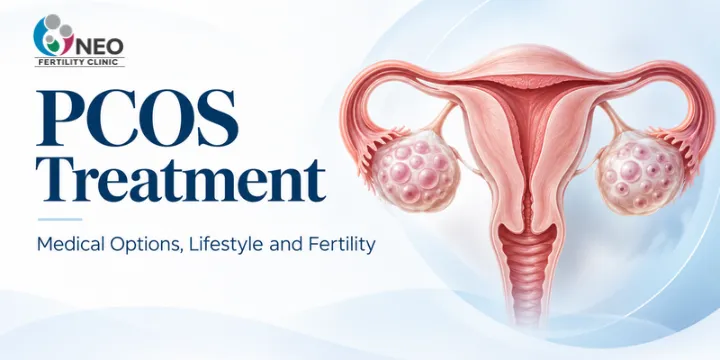
PCOS is a hormonal condition in which the ovaries do not release an egg regularly. Many women with PCOS also have higher levels of male-type hormones, called androgens, and many have insulin resistance. The word "polycystic" refers to the many small follicles often seen on the ovaries in a scan. These are not harmful cysts, and having them does not by itself mean a woman has PCOS. Our page on PCOS treatment explains how the clinic approaches the condition.
PCOS or PCOD: Is There a Difference?
In India, many people use the terms PCOD and PCOS for the same condition. Some use PCOD for a milder pattern centred on the ovaries and PCOS for the wider hormonal syndrome. In practice, what matters is not the label but your symptoms, test results and goals. PCOD treatment and PCOS treatment follow the same principles. Our PCOD treatment page covers this in more detail.
Common Signs of PCOS
- Irregular, infrequent or absent periods
- Acne that is hard to control
- Excess hair on the face, chest or abdomen
- Thinning of scalp hair
- Weight gain, especially around the waist
- Dark, velvety patches of skin on the neck or underarms
- Difficulty getting pregnant
Not every woman has every sign. Some women with PCOS have regular periods, and some are slim.
How PCOS Is Diagnosed
There is no single test for PCOS. Doctors commonly diagnose it when a woman has at least two of these three features:
- Irregular or absent ovulation, often shown by irregular periods
- Signs of raised androgens, seen in symptoms or blood tests
- Many small follicles on an ultrasound scan
Other causes, such as thyroid problems or high prolactin, are ruled out first. Blood tests for sugar and cholesterol are often added.
Irregular Periods Treatment in PCOS
Irregular periods are often the first reason women seek help. When periods are very infrequent, the lining of the uterus can build up over time, so doctors usually aim to bring on regular bleeds. Options include hormonal pills or a course of progesterone, depending on whether you are trying to conceive. Our page on irregular periods treatment explains the wider causes of cycle changes.
Lifestyle: The Foundation of PCOS Treatment
Lifestyle changes help with almost every part of PCOS. Regular physical activity and a balanced diet can improve insulin resistance, cycle regularity and energy. For women who are overweight, losing even a modest amount of weight can bring back ovulation in some cases. Good sleep and stress management also help. These changes work best as steady habits rather than short, strict diets. Your doctor or a dietitian can help you set realistic goals.
Medicines a Doctor May Consider
The choice depends on your symptoms and whether you want to conceive now:
- Hormonal pills. These regulate periods and can improve acne and excess hair in women not trying to conceive.
- Insulin-sensitising medicines. Metformin is sometimes used, particularly when insulin resistance is present.
- Anti-androgen medicines. These can help with hair and skin symptoms, but are not used during pregnancy.
- Skin and hair treatments. Dermatology care can address acne and excess hair.
PCOS Fertility Treatment
Many women with PCOS conceive, some naturally and some with help. PCOS fertility treatment usually begins with lifestyle steps and medicines that encourage ovulation, often tablets such as letrozole. Scans track how the follicles respond. If tablets do not work, injectable medicines may be used with careful monitoring. IUI can be added in some cases. When other steps have not worked, or there are other factors, IVF may be suggested. Women with PCOS can respond strongly to fertility medicines, so dosing and monitoring need particular care.
Long-Term Health with PCOS
PCOS is a long-term condition, so follow-up matters even after symptoms settle. Women with PCOS have a higher risk of type 2 diabetes, high cholesterol and, if periods stay very infrequent, changes in the lining of the uterus. Regular check-ups can catch these early. Mood changes are also common, and it is worth mentioning them to your doctor.
Finding a PCOS Doctor Near You
If you are searching for a PCOS doctor near me, look for a specialist who looks at the whole picture: periods, skin, weight, long-term health and fertility. A good consultation should end with a clear plan and a reason for each step.
Conclusion
Take Charge of PCOS With the Right Support
PCOS is a manageable condition, and care works best when it is matched to your symptoms, your goals and whether you are planning a pregnancy. Lifestyle changes, medicines and fertility support each have a place, and a doctor can help you decide which of them fits you.
At Neo Fertility Clinic, Bangalore, we focus on understanding each woman's symptoms and recommending care based on her individual needs. If you're dealing with irregular periods, PCOS or PCOD, or finding it hard to conceive, you can consult our team at our clinic in Munnekolala, near Marathahalli Bridge, Bengaluru. For appointments or enquiries, contact us at +91 73377 61236 or visit neofertility.co.in.
This article is for general information and does not replace an in-person consultation. Suitability and results vary from person to person.